In the early 1970s, two Seattle teenagers were spending every free hour at a teletype terminal: Bill Gates and Paul Allen, students at Lakeside School, had discovered computers before most adults knew what one was. They had already been paid to write real software. What they wanted was a business of their own.
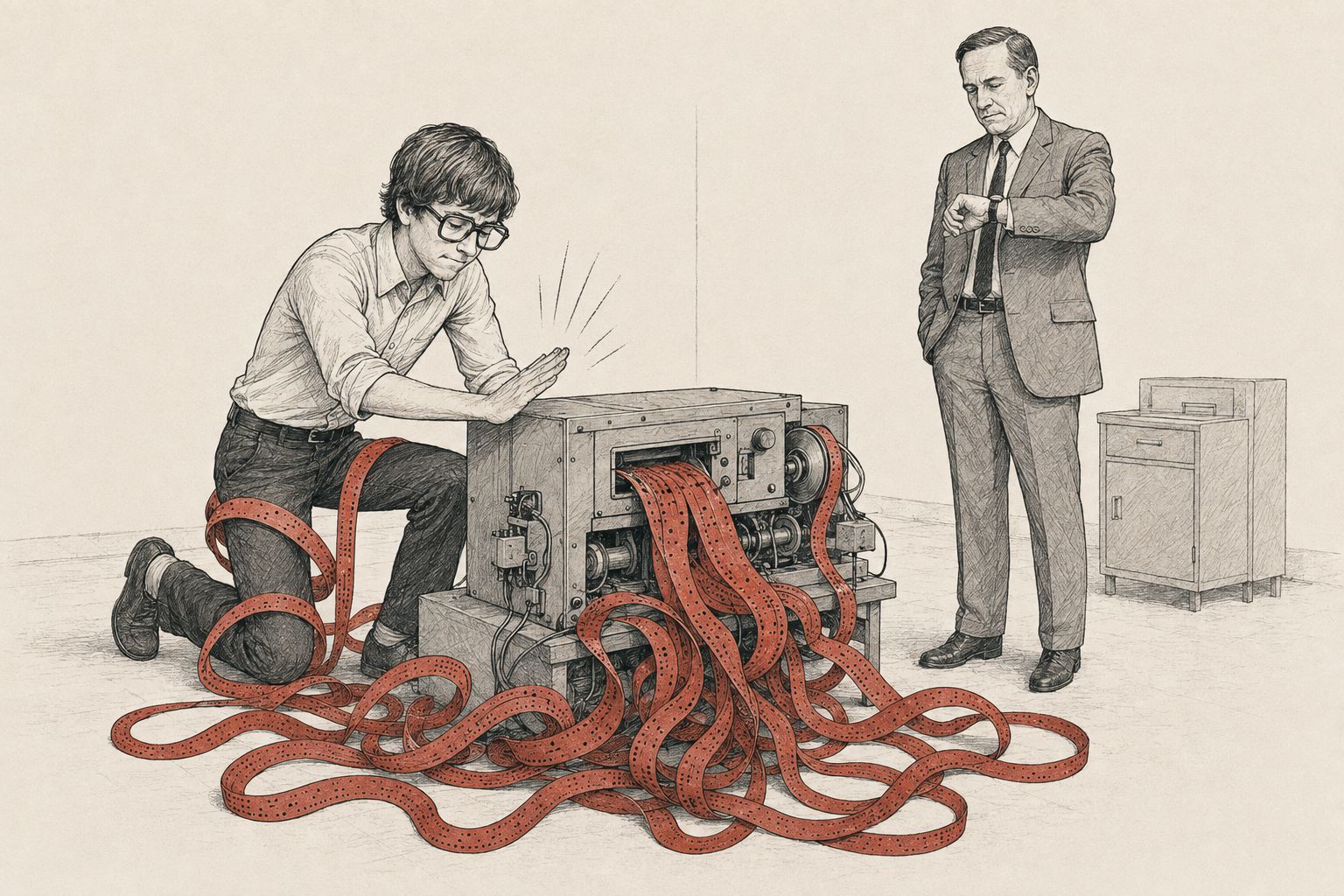
They found one lying on the road — literally. Cities counted traffic with rubber hoses stretched across streets, and every passing car punched a hole into a paper tape. Some poor clerk then had to read those tapes by hand to produce the reports traffic engineers needed. Gates, around sixteen, and Allen, nineteen, decided to automate it. They called the venture Traf-O-Data.
“Success is a lousy teacher. It seduces smart people into thinking they can't lose.”
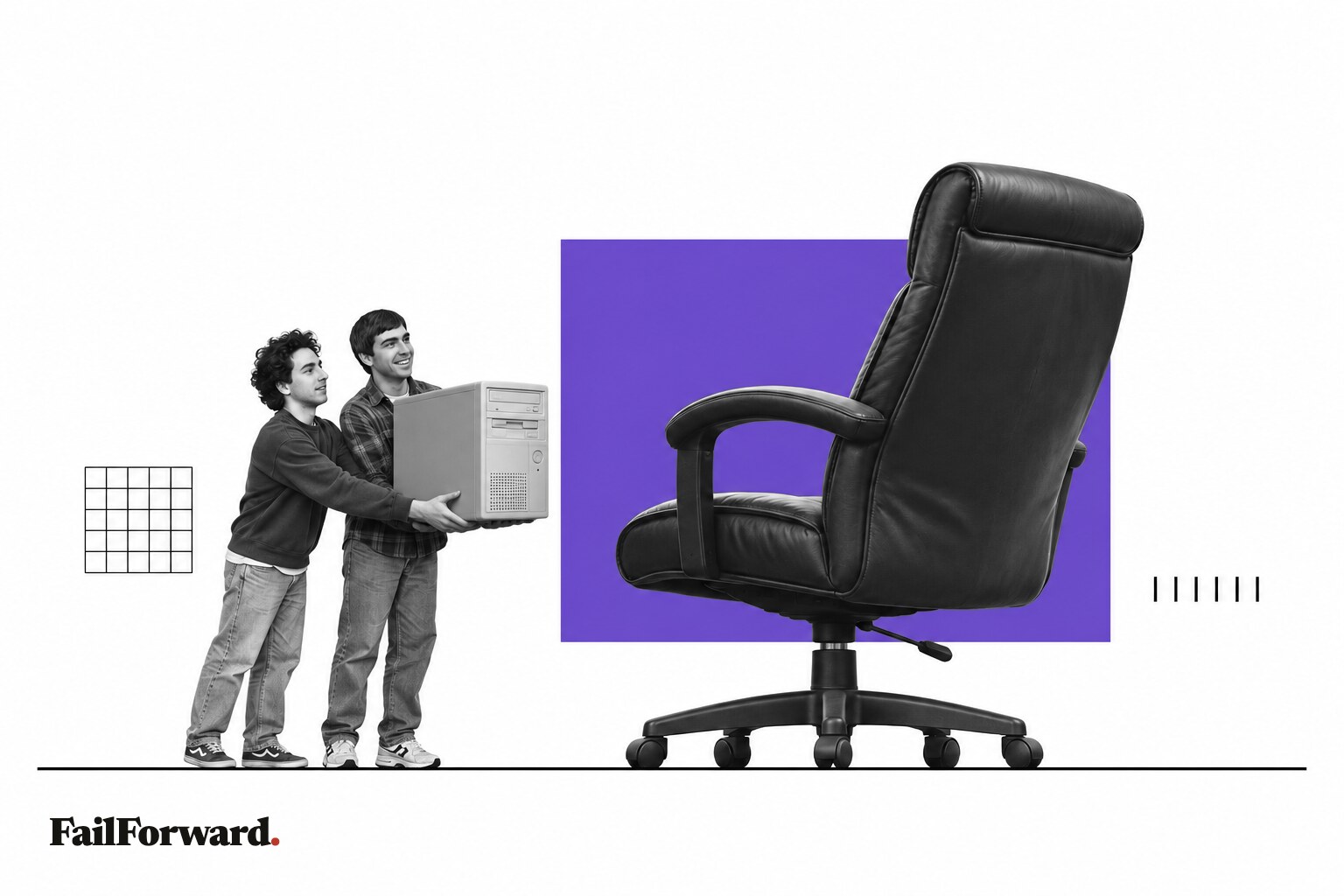
Bill Gates, 'The Road Ahead'The plan was startlingly ambitious for two kids: build their own computer around Intel's new 8008 — the first cheap microprocessor — with an engineering student named Paul Gilbert soldering the hardware together. And because they had no 8008 machine to program on, Allen pulled off the trick that would define their careers: he wrote a simulator of the chip on a university mainframe, so they could write and test software for a computer they didn't own.
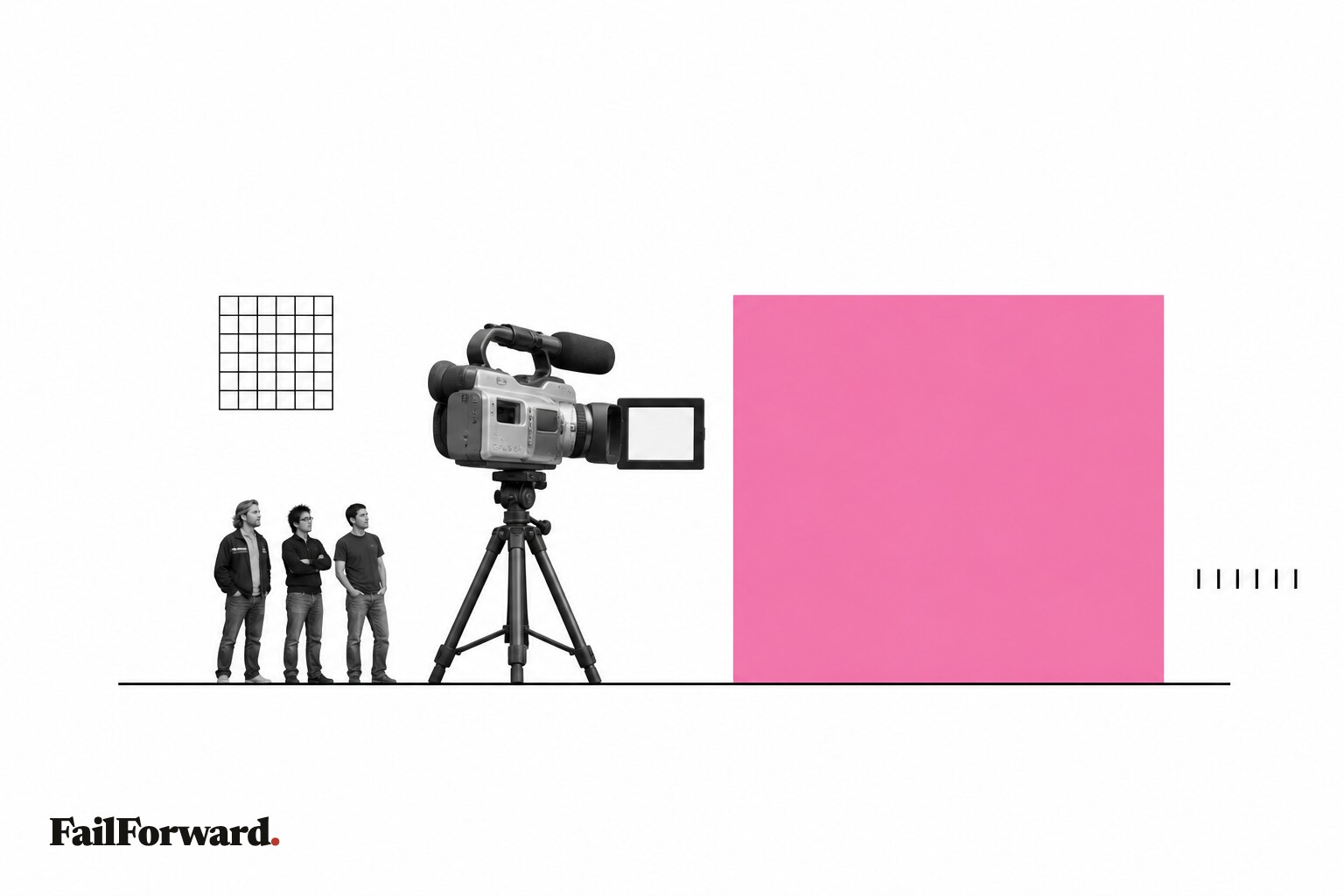
In 1974 came the moment the whole project had been building toward: a demonstration for a King County official who could have become their first real customer. The machine's tape reader failed, in front of the one person who mattered. Gates pleaded that it had worked the night before. The official left unconvinced.
They later got the reader working — and it barely helped, because the State of Washington began offering tape-processing services to cities for free. It is hard to compete with free. Traf-O-Data limped along, generated almost no revenue, and eventually shut down as an unambiguous commercial failure.
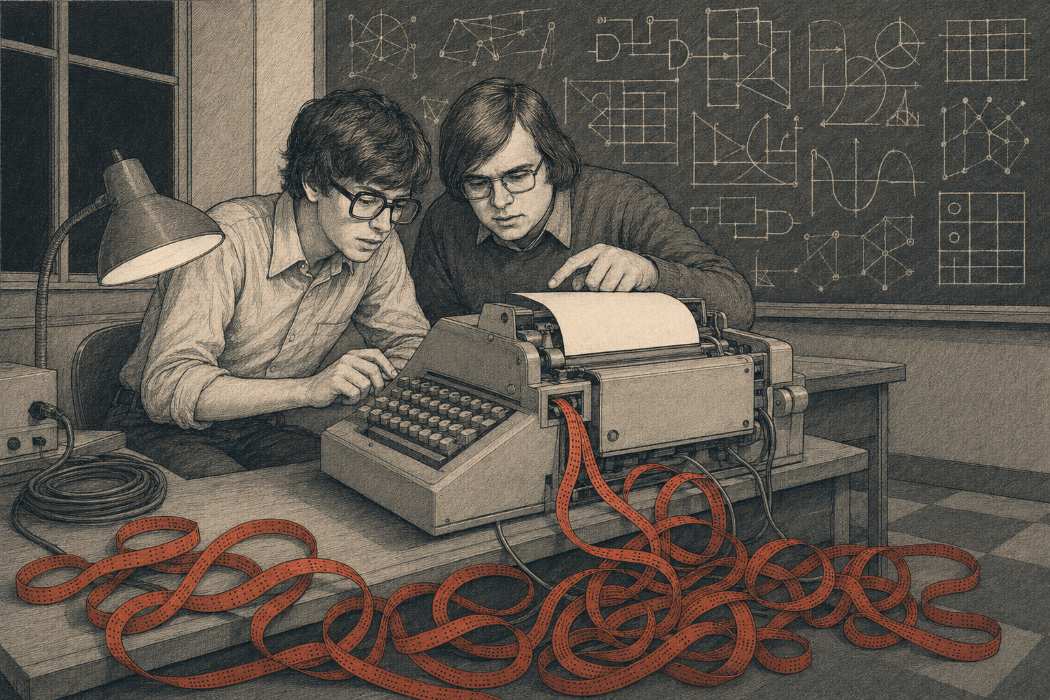
But look at what the failure left behind. Two partners who had learned how microprocessors actually worked, how to build a product around one, how to run (and mis-run) a tiny company together — and one very unusual skill: writing software for a chip they had never touched, on a simulator built by hand.
In January 1975, Popular Electronics put the Altair 8800, the first microcomputer, on its cover. Gates and Allen called its maker and promised a BASIC programming language they had not yet written. They built it in weeks — on a simulator of the Altair's 8080 chip, exactly the Traf-O-Data trick — and when Allen flew to Albuquerque and loaded it onto a real Altair for the first time, it ran. That demo worked. Microsoft was founded months later.
Gates's own summary, from his book The Road Ahead, doubles as Traf-O-Data's epitaph: success is a lousy teacher. The failed traffic machine may be the most productive failure in the history of software.
Questions
What did Bill Gates do before Microsoft?
In the early 1970s Bill Gates, then around sixteen, and Paul Allen built Traf-O-Data, a machine to read the punched paper tapes that cities used to count traffic. The product barely worked, and the business failed.
Why did Traf-O-Data fail?
Traf-O-Data's tape reader failed in its 1974 demo for a King County official who could have become its first real customer. The reader was later fixed, but the State of Washington began processing traffic tapes for cities for free, and the company made almost no money.
How did Traf-O-Data lead to Microsoft?
Traf-O-Data taught Bill Gates and Paul Allen to write software on a simulator of a chip they had never touched. In 1975 the same trick let them write BASIC for the Altair 8800 in weeks; it ran the first time Allen loaded it on a real Altair, and Microsoft followed months later.