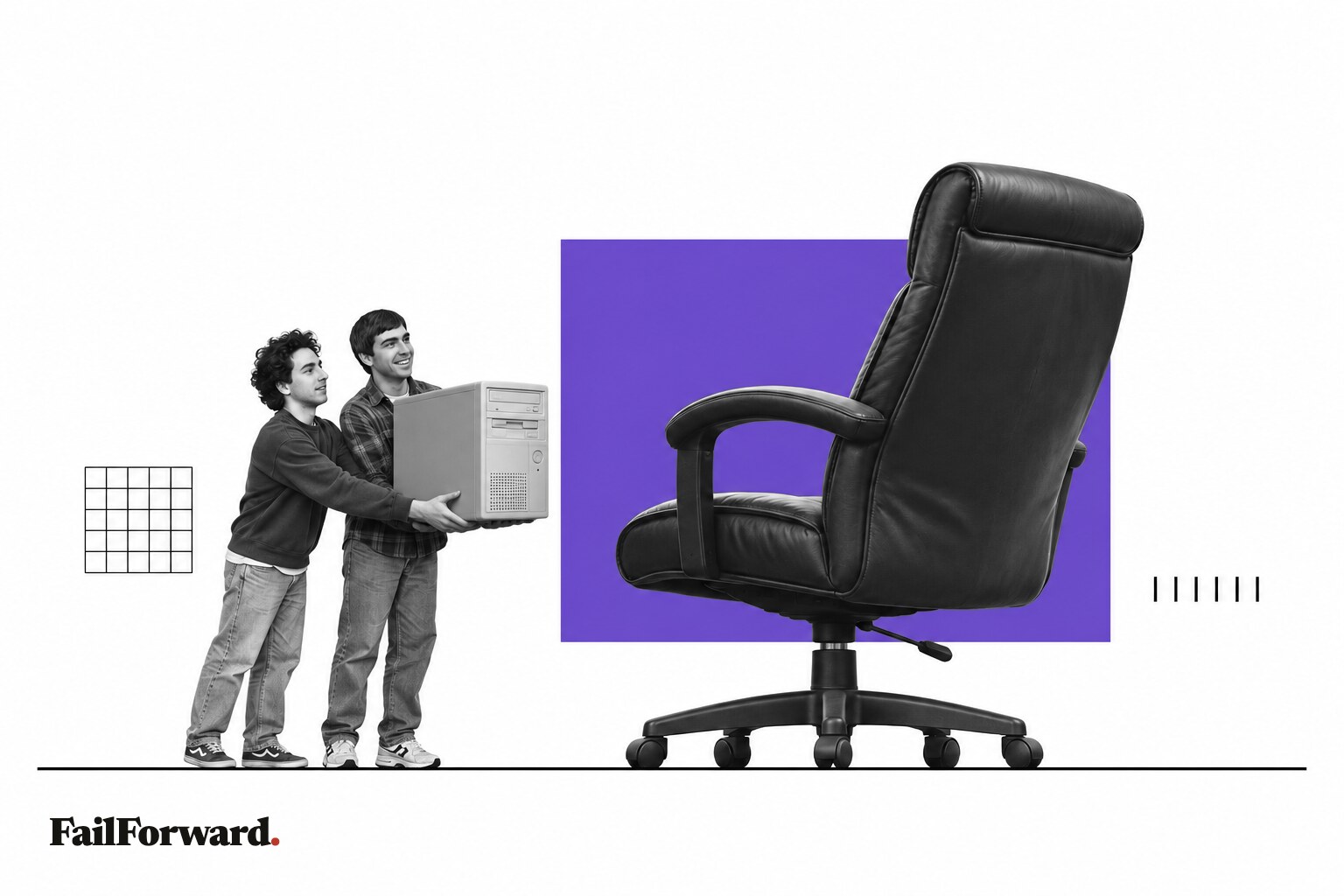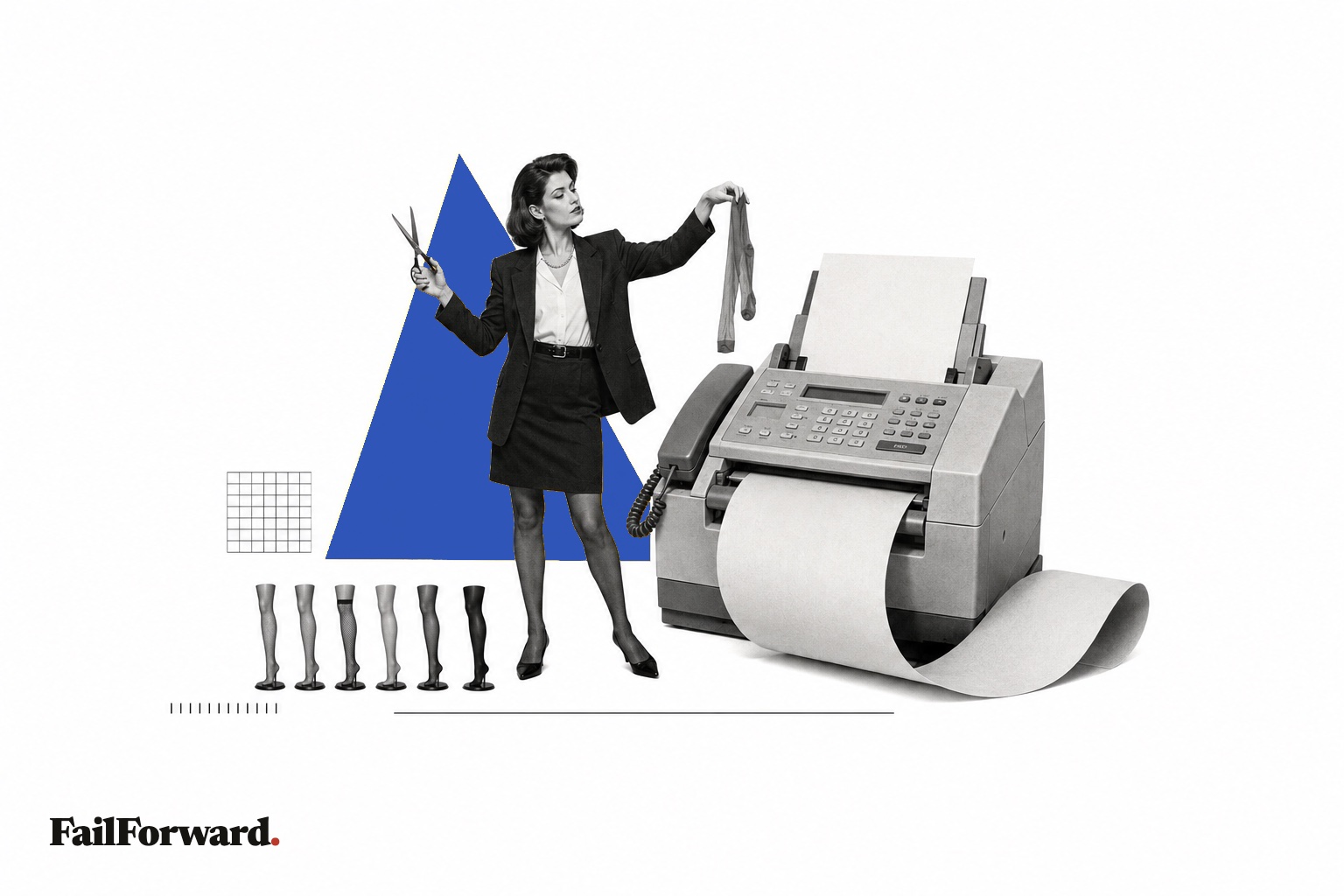
Sara Blakely was supposed to become a lawyer, like her father. The plan died at the Law School Admission Test, which she took twice and scored too poorly on to continue. She went to Walt Disney World instead and lasted three months, then took a job selling fax machines door to door for the office-supply company Danka.
She did that for seven years. Cold-calling office parks in Florida in the humidity, being thrown out of buildings, occasionally having her business card torn up in front of her. She was good at it — a national sales trainer at twenty-five — and she hated it enough to keep a notebook of ideas for something else.
“My dad used to ask us at dinner: what did you fail at this week? If we had nothing, he was disappointed.”
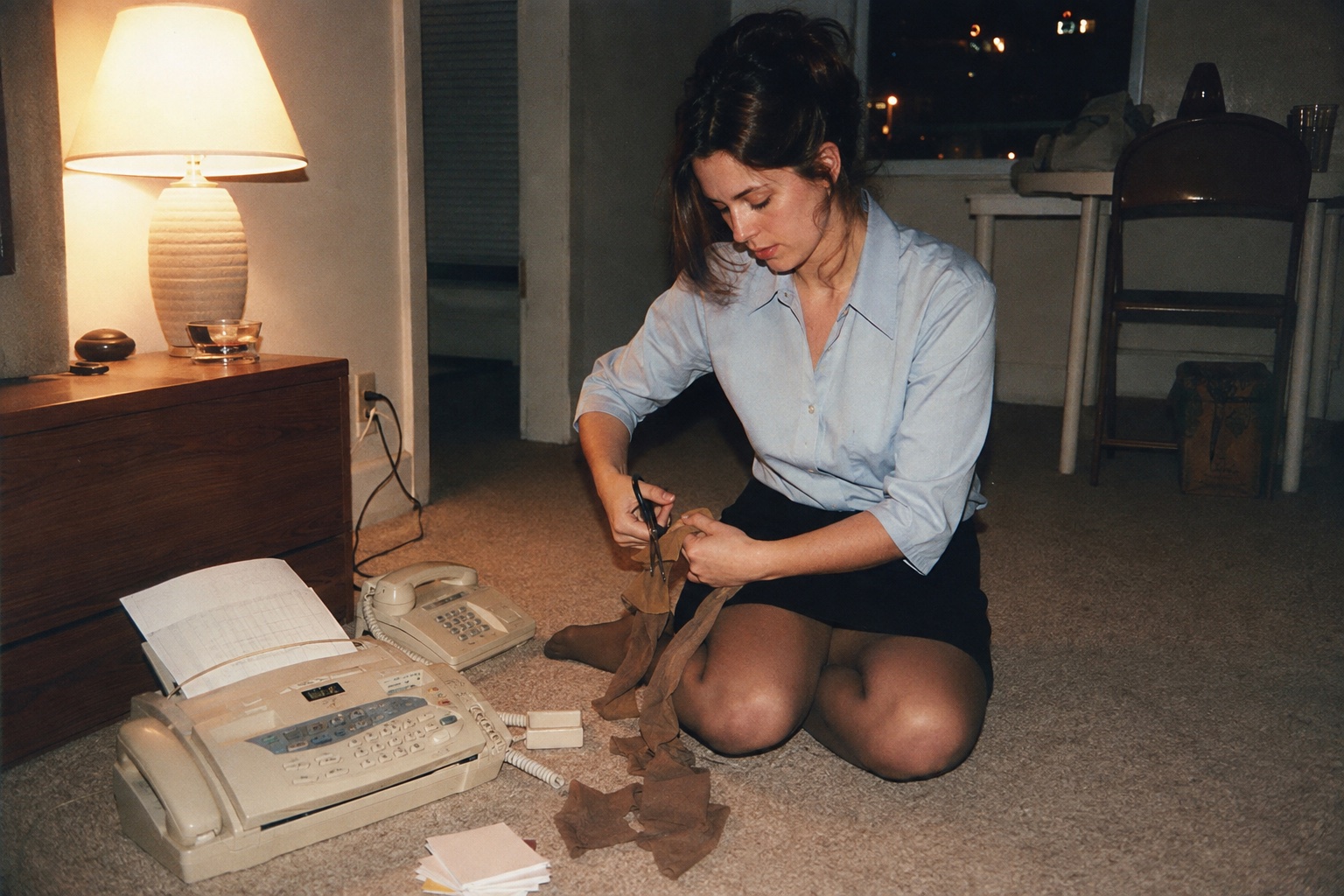
Sara Blakely, recalling her father's dinner-table questionThe idea arrived because of a pair of cream trousers and a party. Blakely wanted the smooth line control-top pantyhose gave her, without the foot. So she cut the feet off a pair with scissors, wore them, and spent the evening pulling the cut ends back down her legs. The product she wanted did not exist.
She spent the next two years and $5,000 of savings — everything she had — trying to make it exist. She wrote the patent application herself out of a textbook rather than pay a firm five figures, then found a lawyer willing to handle the claims for $750. She drove to North Carolina, the centre of American hosiery, and started knocking on mill doors.
Every single mill said no. They were run by men, they made hosiery the way they had always made hosiery, and a saleswoman with no manufacturing background explaining that women wanted footless, seamless underwear struck them as absurd. Some were polite. Some laughed.
Two weeks after she drove home, one of them called back. The operator of a mill in Asheboro had told his three daughters about the strange idea, and his daughters told him it was not strange at all. He agreed to make the prototype.
Getting into stores took the same refusal to observe procedure. She talked her way into a meeting with a Neiman Marcus buyer, and when the buyer was unconvinced by the product lying flat on a table, Blakely took her to the ladies' room and changed into it so the buyer could see the difference on a body. Spanx went into seven Neiman Marcus stores.
In November 2000, Oprah Winfrey named Spanx one of her Favorite Things, and the phones did not stop. Blakely never took outside investment and never spent money on advertising in the early years. In October 2021, Blackstone bought a majority stake in the company at a valuation of $1.2 billion — a company built on savings from selling fax machines.
Questions
What did Sara Blakely do before Spanx?
Sara Blakely sold fax machines door to door for the office-supply company Danka for seven years. Before that, she took the LSAT twice, scored too poorly to become a lawyer and lasted three months at Walt Disney World.
How did Sara Blakely start Spanx?
With $5,000 of savings and a pair of pantyhose with the feet cut off. Every hosiery mill Sara Blakely approached in North Carolina said no, until the operator of one in Asheboro agreed to make the prototype after his three daughters said the idea was not strange at all.
How much was Spanx worth in 2021?
$1.2 billion: in October 2021, Blackstone bought a majority stake in Spanx at that valuation. Sara Blakely had never taken outside investment and spent no money on advertising in the early years.