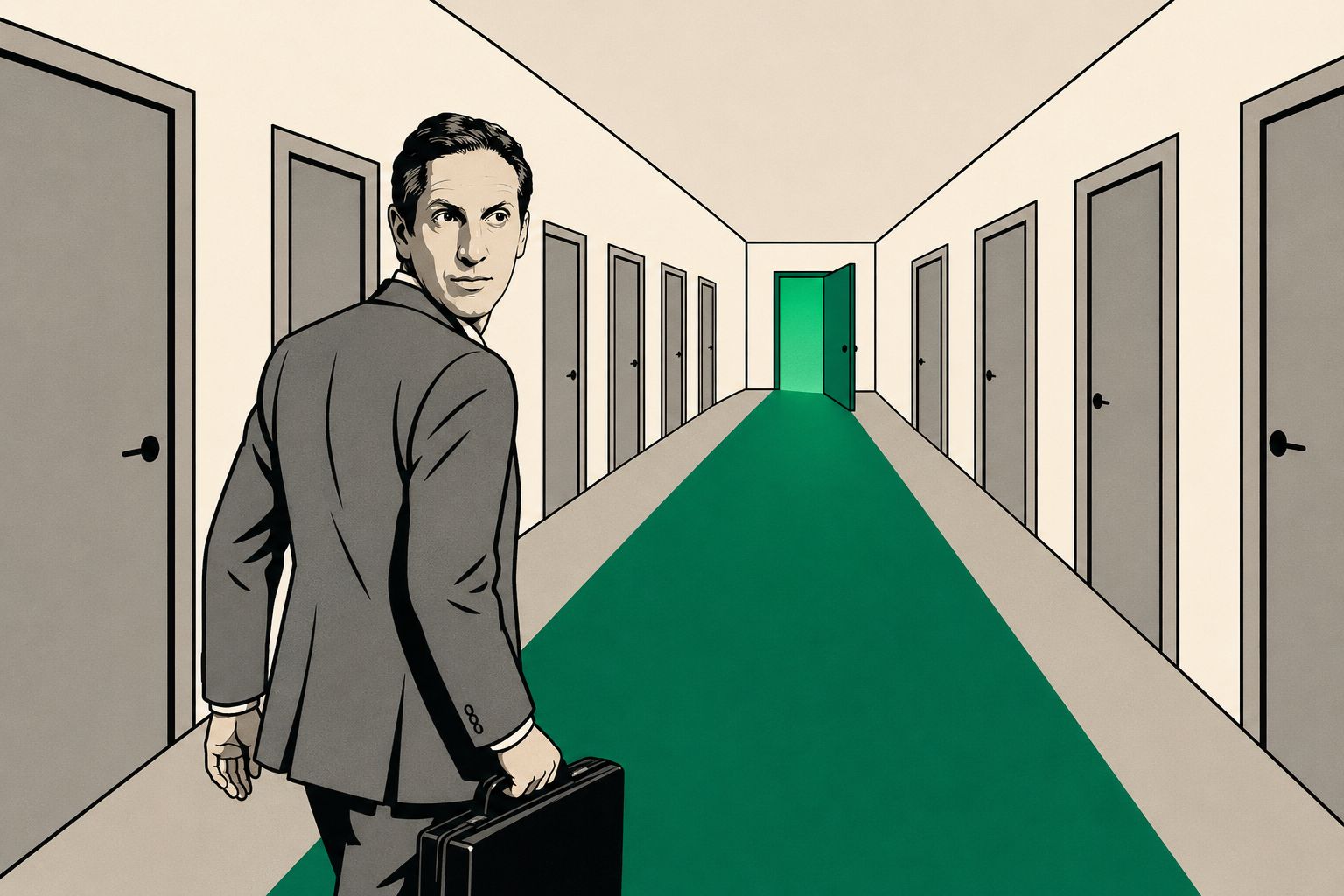
Howard Schultz grew up in Brooklyn public housing, the son of a delivery driver whose broken ankle — no insurance, no compensation — taught the family what it means when work gives nothing back. That memory shaped everything he later built. But first he had to get anyone at all to believe him.
By 1982 he had hustled his way from Xerox salesman to executive at a housewares firm, then talked himself into a marketing job at a tiny Seattle company he admired: Starbucks, then just a handful of stores selling roasted coffee beans — not cups of coffee. A year later, at a trade show in Milan, he wandered into the espresso bars and had his epiphany: Italians didn't buy coffee, they lived in its third place between home and work. America, he decided, was starving for exactly this.
“In the course of the year I spent trying to raise money, I spoke to 242 people, and 217 of them said no.”
Howard Schultz, 'Pour Your Heart Into It'His employers disagreed. Starbucks' founders saw themselves as coffee roasters, not restaurateurs, and turned down his café idea repeatedly. So in 1985 Schultz quit to build it himself, naming his company Il Giornale after the Milanese newspaper. All he needed was about $1.7 million — and that is where the schooling began.
For roughly a year he pitched anyone in Seattle who would take a meeting. The refusals were not gentle: coffee was a commodity in decline, espresso was unpronounceable, the Italian theme was a gimmick, and he was a salesman, not an operator. In his memoir he ran the tally that made the story famous: 242 conversations, 217 rejections.
The twenty-five believers were enough. Il Giornale opened in April 1986, steaming milk to opera music, and quickly grew to a handful of stores. Then, in 1987, came the twist history loves: Starbucks' owners decided to sell the retail company to focus elsewhere — and Schultz, the employee whose idea they had rejected, raised $3.8 million and bought Starbucks outright, folding his cafés into its name.
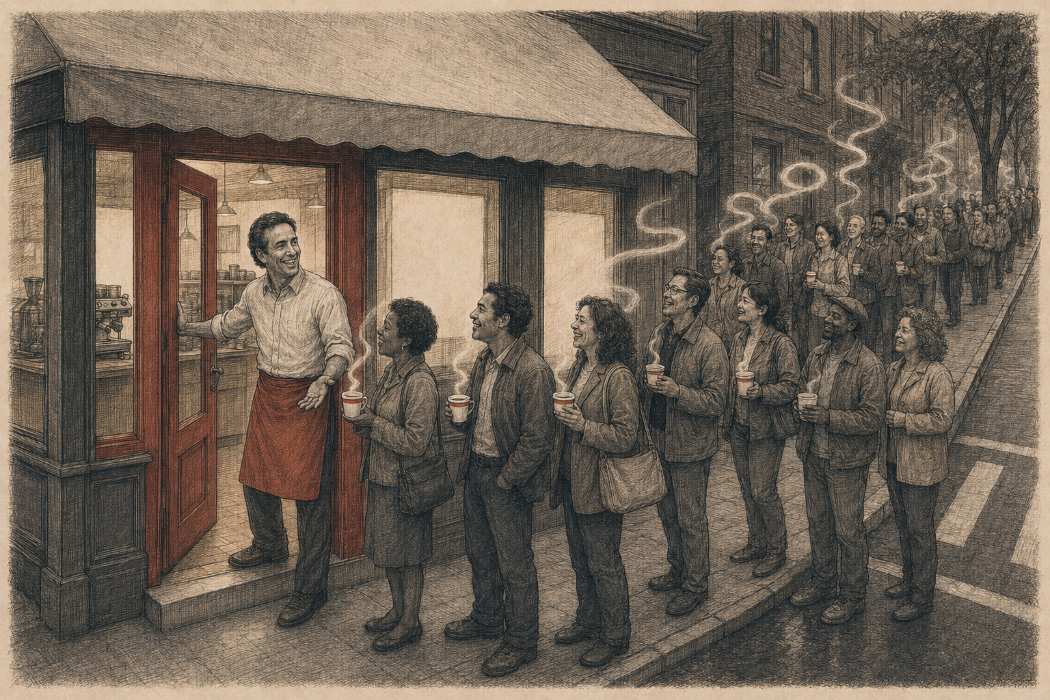
What followed turned rejection arithmetic into industrial history. Schultz expanded the espresso-bar model city by city, insisting on things his 217 rejecters would have laughed at hardest — health insurance and stock for part-time baristas, ownership of every store. When Starbucks went public in 1992 it had fewer than two hundred locations; the decades after took it into the tens of thousands, on every continent that drinks anything.
Schultz would return to the CEO chair in two later crises — 2008 and 2022 — but the founding lesson never changed shape. The idea that built one of the world's most recognizable companies was available, in detail, to 217 qualified people who heard the pitch directly from its creator. They all said no.
His memoir's accounting of that year is deliberately unheroic: no genius, no secret — just a man keeping count of conversations, and refusing to let the count decide. The nos were data. The business was in the yeses.
Questions
How many investors rejected Howard Schultz?
217: raising money for his espresso-bar company Il Giornale in 1985-86, Howard Schultz spoke to 242 people, and by his own count 217 of them said no. The twenty-five believers were enough.
Why did investors turn down Howard Schultz?
Seattle investors told Howard Schultz that coffee was a commodity in decline, espresso was unpronounceable, the Italian theme was a gimmick and he was a salesman, not an operator. Starbucks' own founders had already turned down his café idea.
How did Howard Schultz buy Starbucks?
In 1987 Starbucks' owners decided to sell the retail company, and Howard Schultz, the employee whose café idea they had rejected, raised $3.8 million and bought Starbucks outright, folding his Il Giornale cafés into its name.