On August 3, 2009, Brian Acton posted on Twitter that Facebook had turned him down. In May he had reported an earlier rejection the same way: "Got denied by Twitter HQ. That's ok. Would have been a long commute." Acton was a Stanford-trained engineer and Yahoo's 44th employee. He had lost millions in the dot-com bust and had been without a job since leaving Yahoo in September 2007.
He had met Jan Koum at Yahoo in 1997, when Koum, a San Jose State student moonlighting as a security tester for Ernst & Young, came to inspect Yahoo's advertising system; six months later Yahoo hired him. When Koum's mother died of cancer in 2000 — his father had died three years earlier — Acton started inviting him to his house. In September 2007 both men left Yahoo and took a year off, traveling around South America and playing ultimate frisbee. Both applied to Facebook, and both were rejected. "We're part of the Facebook reject club," Acton later told Forbes.
“Facebook turned me down. It was a great opportunity to connect with some fantastic people. Looking forward to life's next adventure.”
Brian Acton on Twitter, August 3, 2009Koum had started over once already. He grew up in Fastiv, a town outside Kyiv, in a house with no hot water, where his parents rarely talked on the phone in case it was tapped. In 1992, at sixteen, he and his mother emigrated to Mountain View, California, leaving political turmoil and antisemitism behind. They got a small apartment through government assistance and relied on food stamps; his mother babysat, and Koum swept the floor of a grocery store.
In January 2009 Koum bought an iPhone and saw that the seven-month-old App Store was about to create an industry. His idea was an app that showed a status next to each name in the address book: on a call, battery low, at the gym. He named it WhatsApp because it sounded like "what's up," and on his 33rd birthday, February 24, 2009, incorporated WhatsApp Inc. in California. Early versions kept crashing. After a game of ultimate frisbee Koum told Acton he should probably give up and look for a job. "You'd be an idiot to quit now," Acton said. "Give it a few more months."
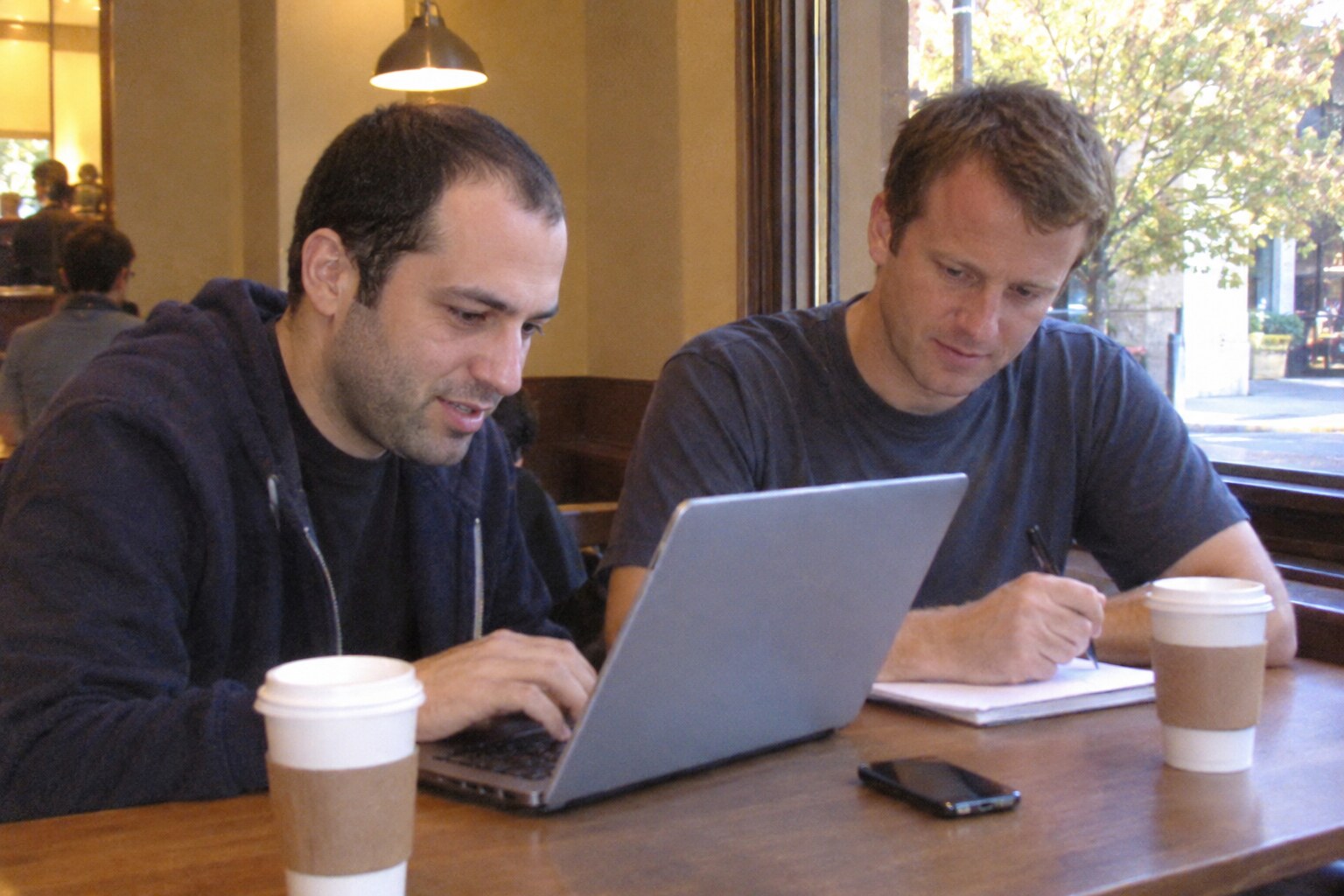
In June 2009 Apple introduced push notifications, and Koum made WhatsApp alert a user's contacts whenever their status changed. People began chatting through their statuses, and Koum realized he had built a messaging service by accident. When version 2.0 added messages, active users jumped to 250,000, and he went to see Acton, who was still unemployed. In October Acton persuaded five former Yahoo colleagues to put in $250,000 of seed money, becoming a co-founder with a stake; he officially joined on November 1, 2009. They worked upstairs at Red Rock Coffee in downtown Mountain View.
They refused to sell ads, and by early 2014 more than 450 million people used WhatsApp every month. On February 19, 2014, Facebook announced it would buy the company for $4 billion in cash and about $12 billion in Facebook shares, plus $3 billion in restricted stock units for the founders and employees, vesting over four years — $19 billion in all.
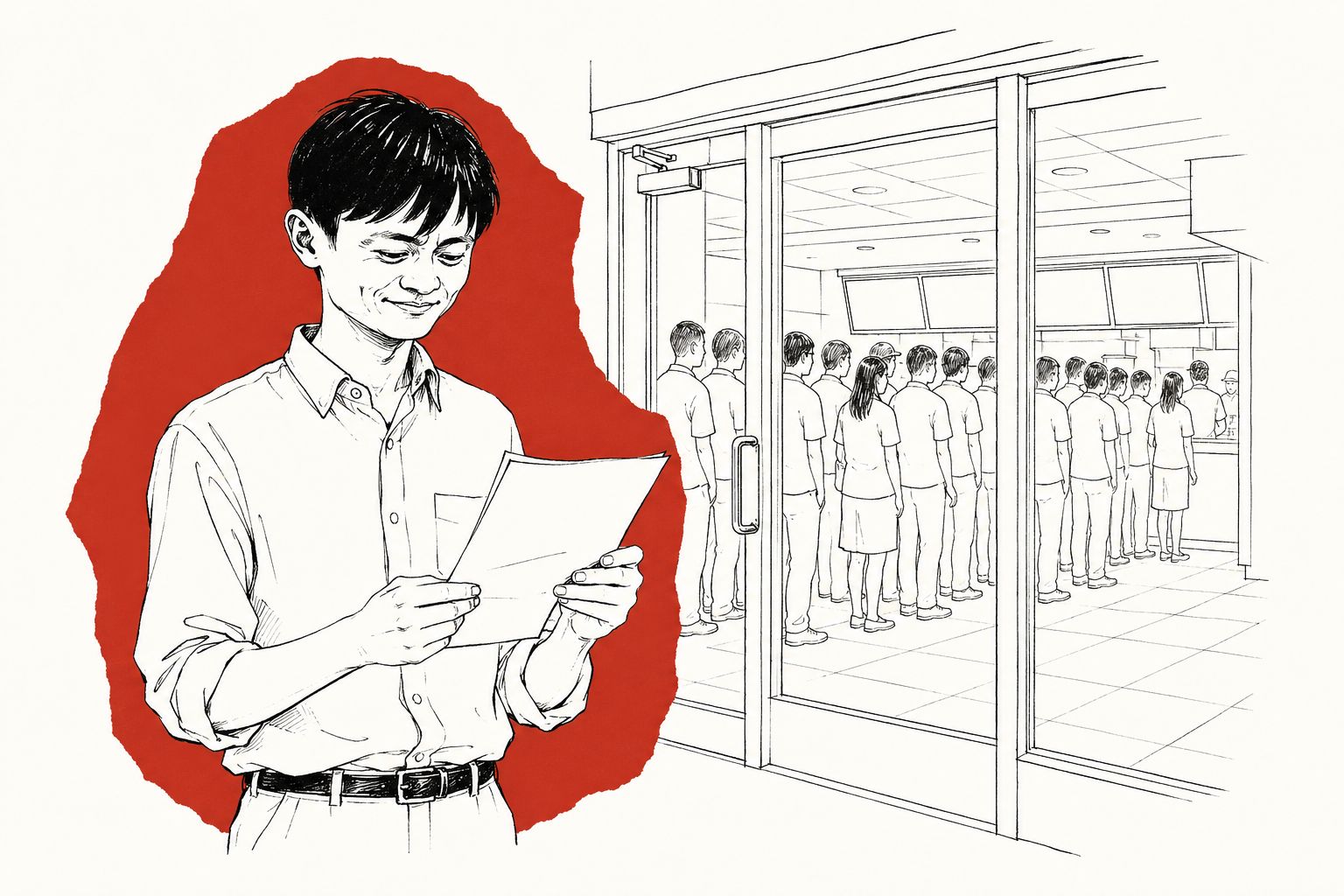
That day Koum, Acton and their investor Jim Goetz of Sequoia Capital drove a few blocks from WhatsApp's office, across the railroad tracks, to a disused white building: the former North County Social Services office, where Koum had once stood in line for food stamps. They signed the agreement there; a photo Koum gave Forbes shows him signing the papers against the building's door.
The day after the announcement, news sites reprinted Acton's 2009 tweets: the company that would not hire him was about to make him a billionaire. When the deal closed on October 6, 2014, Facebook's rising share price had lifted its value to almost $22 billion.
Acton left Facebook in late 2017 after disagreeing with its leaders over how to make money from WhatsApp, walking away from unvested stock that Forbes valued at $850 million. In March 2018, as the Cambridge Analytica scandal broke, he posted on Twitter: "It is time. #deletefacebook."
Questions
Did Facebook reject Brian Acton?
Yes. Facebook turned Brian Acton down for a job in 2009, and he announced it on Twitter on August 3 that year; Twitter had rejected him in May. In 2014 Facebook agreed to buy WhatsApp, which he co-founded, for $19 billion.
How much did Facebook pay for WhatsApp?
Facebook agreed in February 2014 to pay $19 billion: $4 billion in cash, about $12 billion in shares and $3 billion in restricted stock for WhatsApp's founders and staff. By the October 2014 closing, rising Facebook shares had lifted the value to almost $22 billion.
Where did Jan Koum sign the WhatsApp deal with Facebook?
At the former North County Social Services office in Mountain View, California, where Jan Koum had once stood in line for food stamps after emigrating from Ukraine at sixteen. He signed there with Brian Acton and investor Jim Goetz on February 19, 2014.
Sources
- The rags-to-riches tale of how Jan Koum built WhatsApp — Forbes, 2014
- Facebook to Acquire WhatsApp — Facebook newsroom, 2014
- WhatsApp Founders Include Facebook Reject, Ukrainian Immigrant — NBC News, 2014
- WhatsApp's reclusive founder has quietly become a megadonor to Jewish causes — JTA, 2022
- Facebook Form 10-Q for Q3 2014: WhatsApp acquisition completed — SEC
- Brian Acton on #DeleteFacebook and why he left $850 million behind — Forbes, 2018