As a boy in Hangzhou, Ma Yun wanted one thing badly enough to work for it free: English. For years he rose early and bicycled to the city's tourist hotel to guide foreign visitors around at no charge, trading his time for conversation. One of them nicknamed him Jack. It was the only credential he would have for a long while.
Everything measurable rejected him. He failed China's brutal college entrance exam twice — mathematics was the massacre; by his own telling, one attempt scored a single-digit result — before scraping into a local teachers college on the third try. After graduation came the job hunt he has narrated on the world's biggest stages: dozens of applications, dozens of rejections.
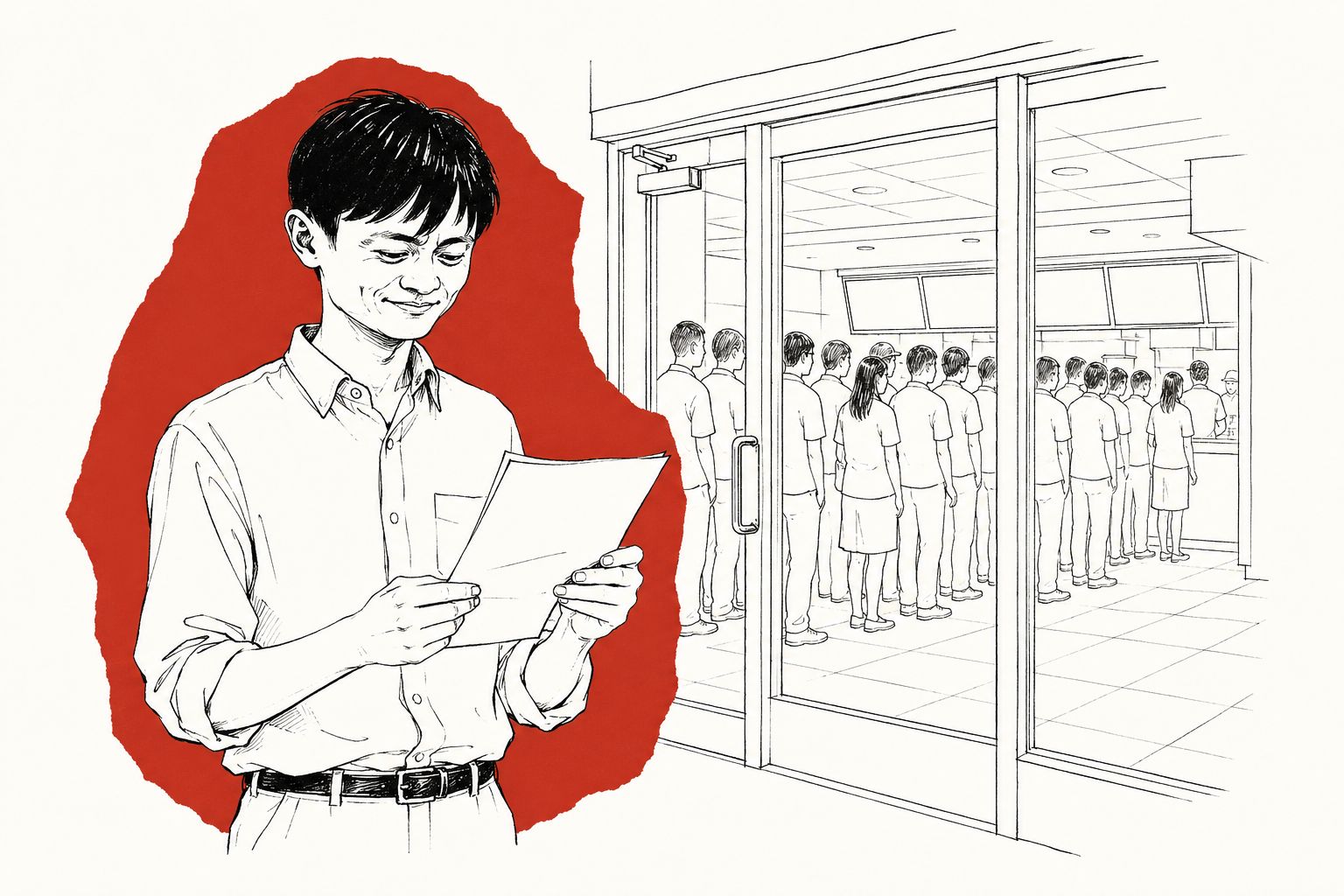
“We went to KFC when it came to my city. Twenty-four people went for the job. Twenty-three were accepted. I was the only guy who wasn't.”
Jack Ma, University of Nairobi speech, 2017The list is his favorite comedy routine with a knife inside it. When KFC came to Hangzhou, twenty-four people applied; twenty-three were hired. When the police recruited, four of five applicants got in. Harvard, he says, rejected him ten times — he applied mostly to make the point. The only door that opened was a teaching post paying around twelve dollars a month.
In 1995, translating for a trade delegation in the United States, he sat down at a friend's computer and met the internet. He typed 'beer' into a search engine and found beers of the world — but nothing from China. He flew home, borrowed money, and founded China Pages, one of the country's first internet companies: directory listings for Chinese businesses seeking foreign customers.
It was the right idea a few years too early, held by a man with no leverage. To survive, China Pages entered a joint venture with a state-owned telecom partner — which promptly used its majority to take the wheel. Ma watched his first company get steered away from him and eventually walked away from his own creation.
The comeback began in February 1999, in his apartment at Lakeside Gardens in Hangzhou. Ma gathered seventeen friends and former students, talked for two hours about making it easy for small Chinese factories to sell to the world, and raised about sixty thousand dollars among them. The eighteen founders called it Alibaba — a name every culture could pronounce, belonging to a story about opening sesame.
The believers arrived fast where the employers never had: Goldman Sachs invested, and Masayoshi Son of SoftBank famously committed twenty million dollars after a few minutes of listening. Alibaba survived the dot-com winter, out-fought eBay in China with Taobao, and built the commercial plumbing of a billion-consumer internet.
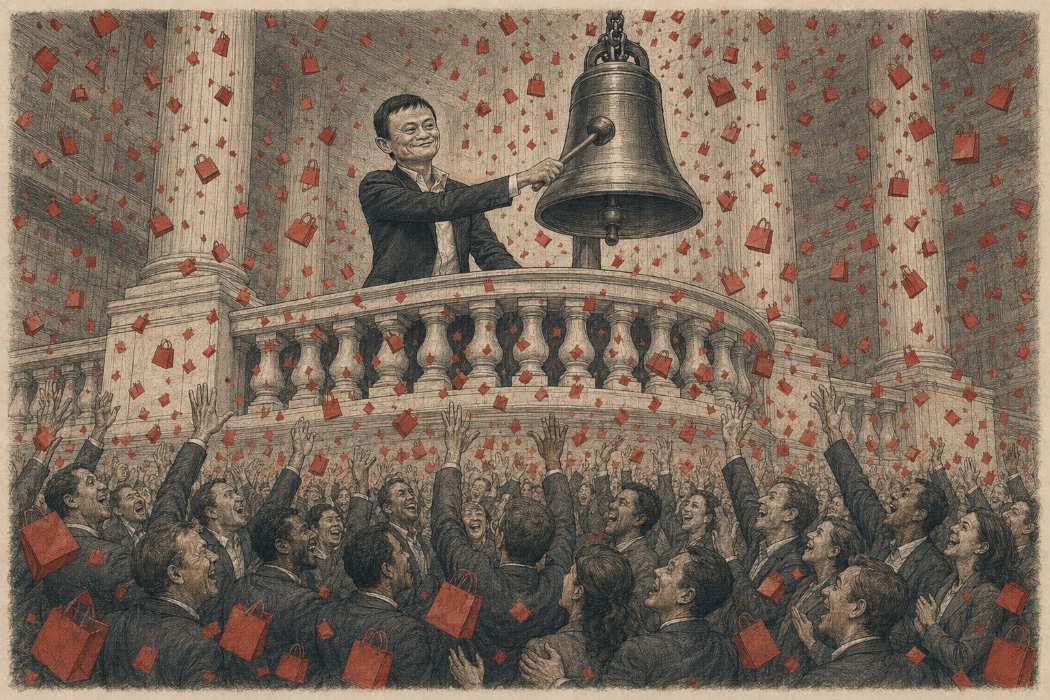
In September 2014, Alibaba listed in New York and raised $25 billion — the largest IPO in history at the time — briefly making the man KFC wouldn't hire the richest person in China. Ma's stump-speech moral has never changed: the rejections were the tuition, and he simply kept enrolling.
Questions
Did KFC really reject Jack Ma?
Yes, by Jack Ma's own account: when KFC came to Hangzhou, twenty-four people applied and twenty-three were hired, and he was the only one turned down. He has told the story on big stages, including a 2017 speech at the University of Nairobi.
How many times did Jack Ma fail before Alibaba?
Jack Ma failed China's college entrance exam twice, got into a teachers college on the third try, collected dozens of job rejections and says Harvard turned him down ten times. Then his first internet company, China Pages, slipped out of his control.
How did Jack Ma start Alibaba?
In February 1999 Jack Ma gathered seventeen friends and former students in his Hangzhou apartment, talked for two hours about helping small Chinese factories sell to the world, and raised about $60,000 among them. The eighteen founders named the company Alibaba.