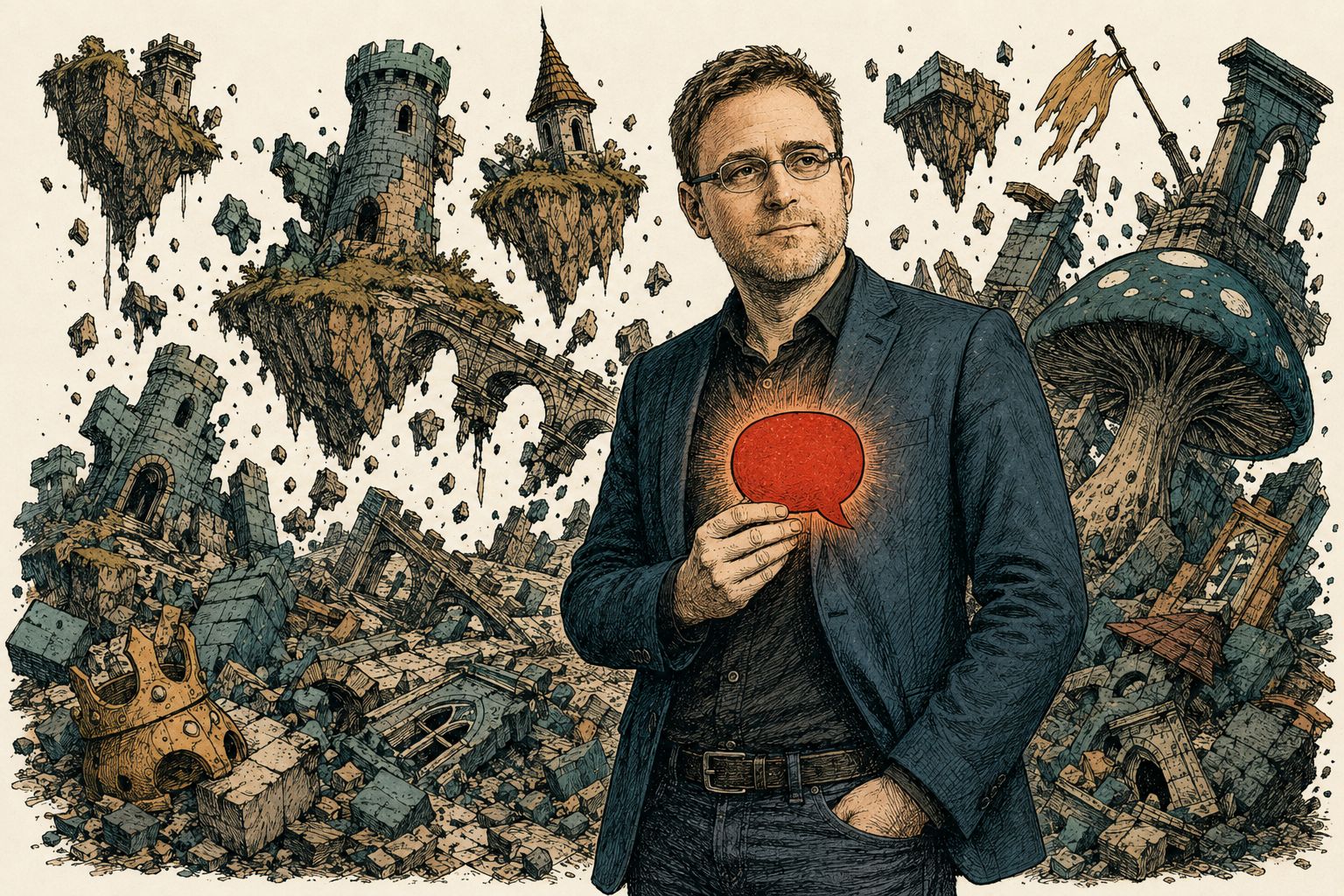
In 2005, Evan Williams was the rare founder with nothing to prove. He had co-created Blogger, survived its near-death, and sold it to Google. So when his friend Noah Glass started Odeo — a platform for the brand-new medium of podcasting — Williams invested, then stepped in to lead it. The press swooned; venture capital followed; podcasting was about to be the next big thing.
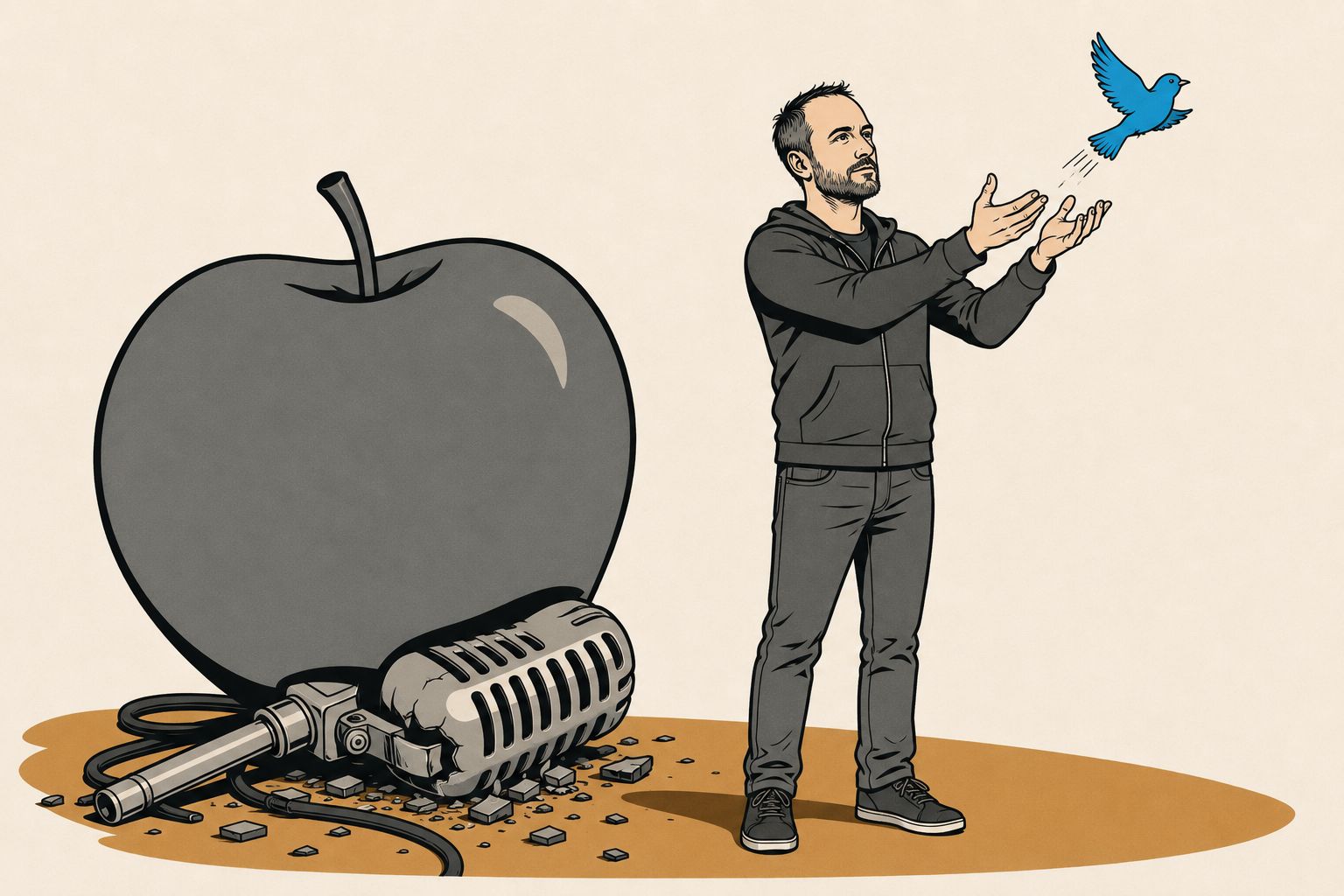
It was. Just not for them. In June 2005, Apple announced that iTunes would support podcasts natively — discovery, subscription and playback, free, on every iPod on earth. Williams later admitted the announcement gutted the company's premise. Odeo kept shipping features, but a startup cannot out-distribute the platform its users already live on.
“just setting up my twttr”
Jack Dorsey's first tweet — March 21, 2006, while Odeo was dyingBy early 2006 the company was demoralized and rich enough to be embarrassed about it: millions in the bank, no future in sight. Williams did something unusual — he told the team to stop fixing Odeo and start holding hackathons to hunt for a different idea entirely.
One group — engineer Jack Dorsey, Glass, and a few others — sketched a service for broadcasting short status updates by SMS. Dorsey had nursed the idea for years; Glass, by many accounts, gave it its heartbeat and its name. The prototype was called twttr. On March 21, 2006, Dorsey posted the first message in its history: "just setting up my twttr."
Inside Odeo, plenty of people thought it was a toy. Outside, investors were not consulted at all — and that became the sore point. In the fall of 2006, Williams wrote to Odeo's backers offering to buy the company back so they would not be stuck holding his failure. They took the money. Everything — Odeo, and the toy called Twitter — went to his new holding company, Obvious Corp.
It was, in hindsight, one of the great accidental acquisitions in tech history: the investors were made whole on a dead podcast platform and, in the process, sold away early Twitter. By April 2007 Twitter was spun out as its own company with Dorsey as CEO, fresh from a breakout performance at the SXSW festival where the geeks of Austin narrated their days in 140 characters.
Twitter grew into the world's town square — the service where revolutions, elections, markets and celebrities collided in real time. Williams served as its CEO through a critical growth era, became a billionaire at its IPO, and went on to found Medium. Odeo, the company that was supposed to matter, exists today only as a trivia answer.
The lesson Williams himself has drawn from the wreck is the one every cornered founder needs: when the market disappears, the team and its momentum are what remain. Aim them somewhere new fast enough, and the failure becomes a footnote to what it accidentally created.
Questions
What was Odeo?
Odeo was the podcasting startup that Twitter came out of. Noah Glass started it, and Evan Williams, who had sold Blogger to Google, invested and then stepped in to lead it.
Why did Odeo fail?
Because Apple built podcasts into iTunes: in June 2005 Apple announced native podcast discovery, subscription and playback, free on every iPod, and Evan Williams later admitted the announcement gutted Odeo's premise.
How did Twitter come out of Odeo?
From a hackathon. In early 2006 Evan Williams told Odeo's team to hunt for a new idea, and a group including Jack Dorsey and Noah Glass sketched an SMS status service called twttr; in the fall of 2006 Williams bought Odeo, Twitter included, back from its investors.