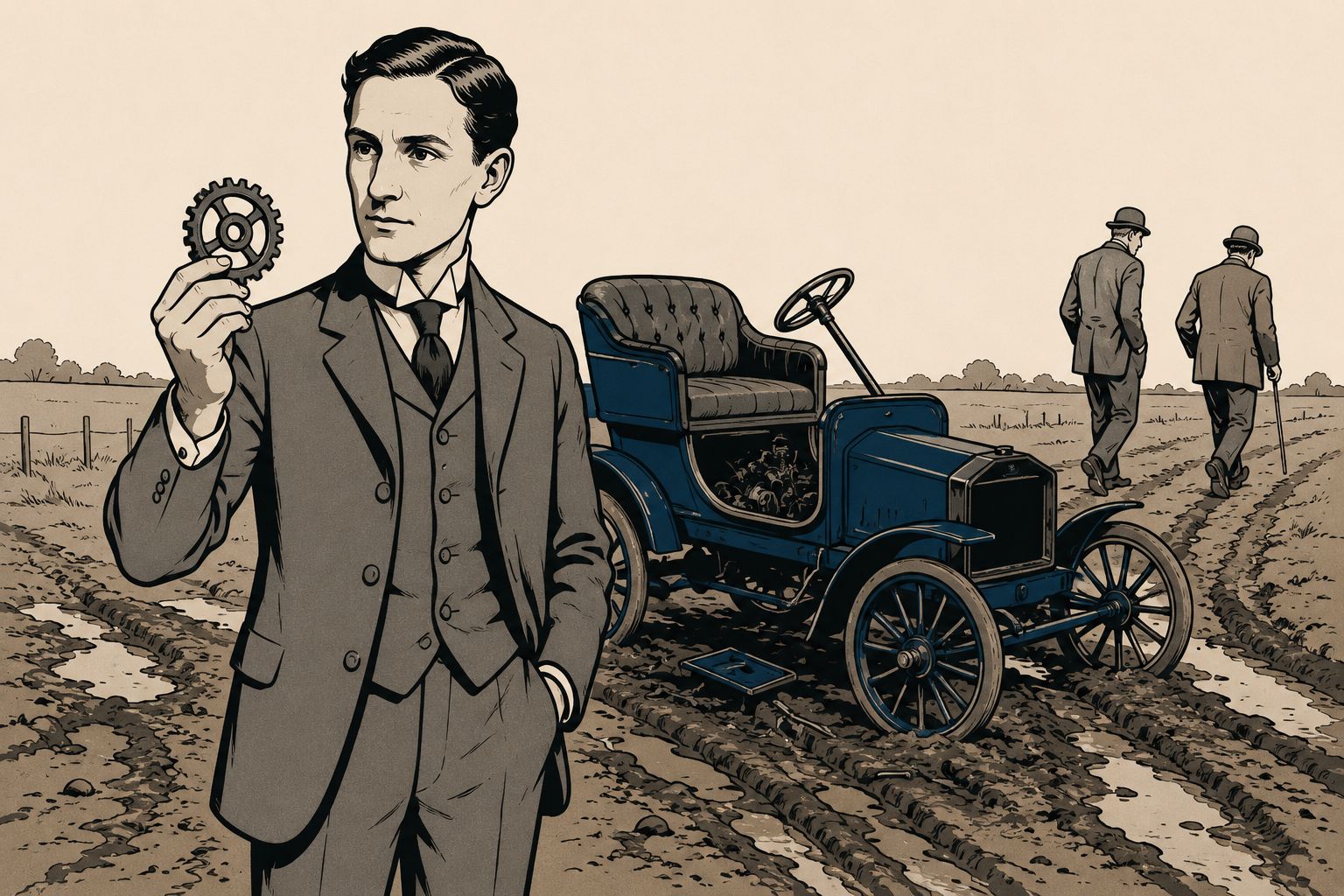
Henry Ford came to the automobile sideways: a farm boy turned machinist who rose to chief engineer at Detroit's Edison power station and, in his off-hours in 1896, bolted together a spindly gasoline buggy he called the Quadricycle. It worked well enough to convince some of Detroit's richest men that this tinkerer could build them a car business.
In August 1899 they staked him to the Detroit Automobile Company, with the city's mayor among the backers. It was, by every measure, a failure: in over a year the shop produced only a handful of vehicles, and the ones it did finish were heavy, unreliable and far too expensive. Ford, a perfectionist without a costing discipline, kept redesigning instead of shipping. In January 1901 the investors shut it down.
“Failure is only the opportunity more intelligently to begin again.”
Henry Ford, 'My Life and Work'Ford's response was pure theater — and pure strategy. That October he entered a race at Grosse Pointe against Alexander Winton, the country's most famous carmaker, and beat him in front of thousands. Racing was the era's product demo, and the win did exactly what he needed: it made the money men believe again.
A month later the same circle founded the Henry Ford Company around him. It lasted, for Ford, about four months. When the investors — impatient with his pace — brought in the master engineer Henry Leland to supervise the works, Ford walked out with a cash settlement and the rights to his own name. The company he left rebranded itself as Cadillac and did fine without him. The lesson stung twice over.
Most men would have taken the hint. Ford took a partner — coal dealer Alexander Malcomson — built another racer, the monstrous 999, and let the daredevil Barney Oldfield terrify crowds with it while he lined up a dozen investors. In June 1903, at thirty-nine, he incorporated the Ford Motor Company with about $28,000 in cash. Weeks later, with the bank balance down to a few hundred dollars, the first sale arrived — and this time the cars shipped.
What had changed was not the man's engineering but his target. The two failures had taught Ford exactly what he did not want to build: heavy, hand-fitted luxury machines for rich enthusiasts. His obsession became the opposite object — a light, simple, rugged car that a farmer could afford and repair.
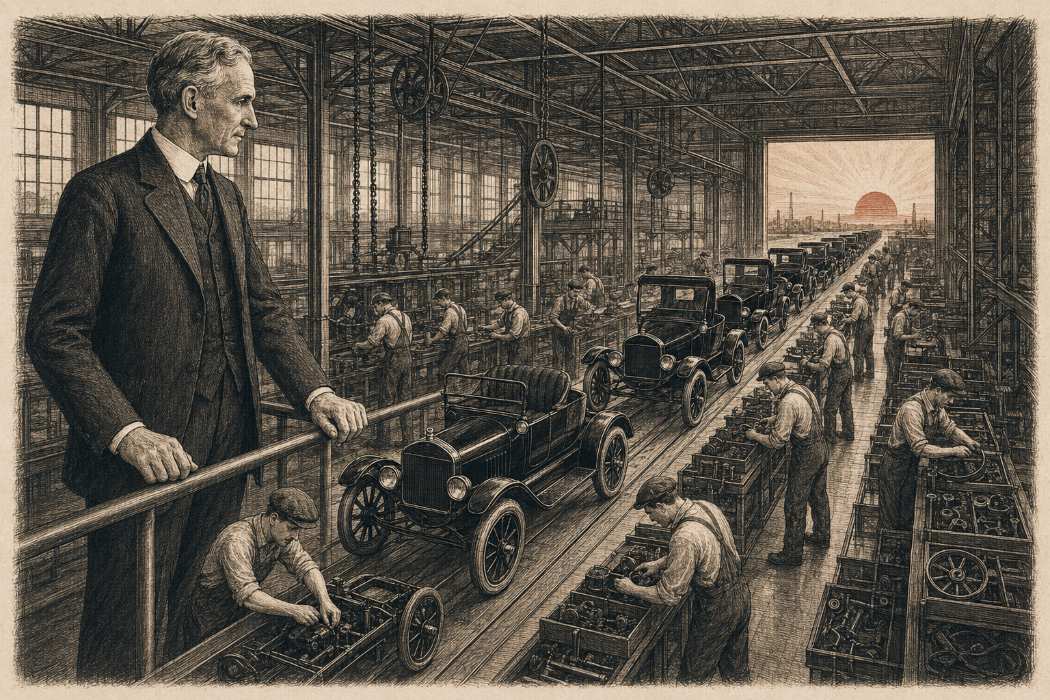
That car appeared in October 1908 as the Model T, and in 1913 Ford's Highland Park plant added the moving assembly line that made it relentlessly cheaper every year. The company the failed founder built third went on to put the world on wheels and to define mass production itself.
Ford's own epitaph for the Detroit Automobile Company years, written in his memoir, is the cleanest one-line theory of failure in industrial history: the failures were simply the opportunity to begin again, more intelligently.
Questions
What were Henry Ford's business failures?
Henry Ford failed twice before Ford Motor Company: investors shut down his first firm, the Detroit Automobile Company, in January 1901, and he left the second, the Henry Ford Company, after about four months. That company was renamed Cadillac.
What challenges did Henry Ford face?
Henry Ford's own perfectionism and impatient investors: without a costing discipline, Ford kept redesigning instead of shipping, so his first cars came out heavy, unreliable and far too expensive. Investors shut down one of his companies and pushed him out of the next.
How did Henry Ford start Ford Motor Company?
In June 1903, at thirty-nine, Henry Ford incorporated the Ford Motor Company with about $28,000 in cash after lining up a dozen investors. Weeks later, with the bank balance down to a few hundred dollars, the first sale arrived; the Model T followed in October 1908.