Rovio began the way a thousand game studios begin: with a prize. In 2003, three Helsinki engineering students won a mobile-game competition, took it as a sign, and founded a company. The mobile games market of the era was a miserable place to be brilliant — hundreds of handset models, carriers as gatekeepers, tiny screens and tinier margins.
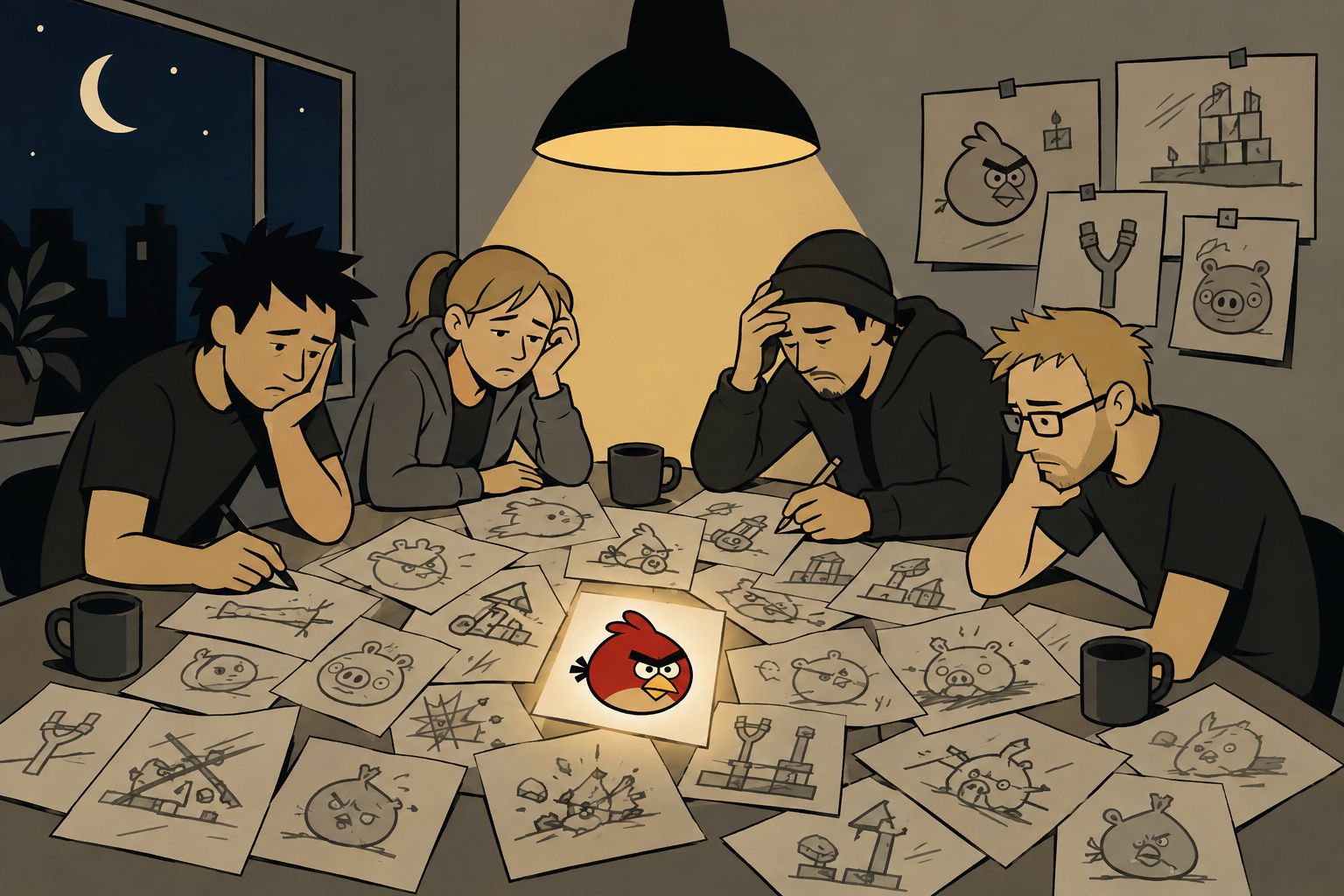
For six years the studio survived the way small studios do: work-for-hire projects for bigger publishers, interleaved with its own titles that came and went without a trace. The internal count would later become legend — roughly fifty-one games, none of them a hit. Competent, shipped, forgotten.
By 2009 the model had run out. The company had shrunk from around fifty people to a dozen; money was nearly gone, and the founding families were watching six years of work approach its end. The strategic call made in that trench defined everything after: stop scattering shots across every phone on earth, and make one original game, wholly owned, for the one new platform where a small studio could reach millions directly — Apple's App Store.
The hunt for that game ran through hundreds of internal pitches. In March 2009, designer Jaakko Iisalo produced a screenshot mockup — not a game, just an image — of round, wingless, furious little birds trudging across the ground. Nobody could explain why the birds were angry or what the game was. Everybody who saw them wanted to know. That reaction, the team decided, was the product.
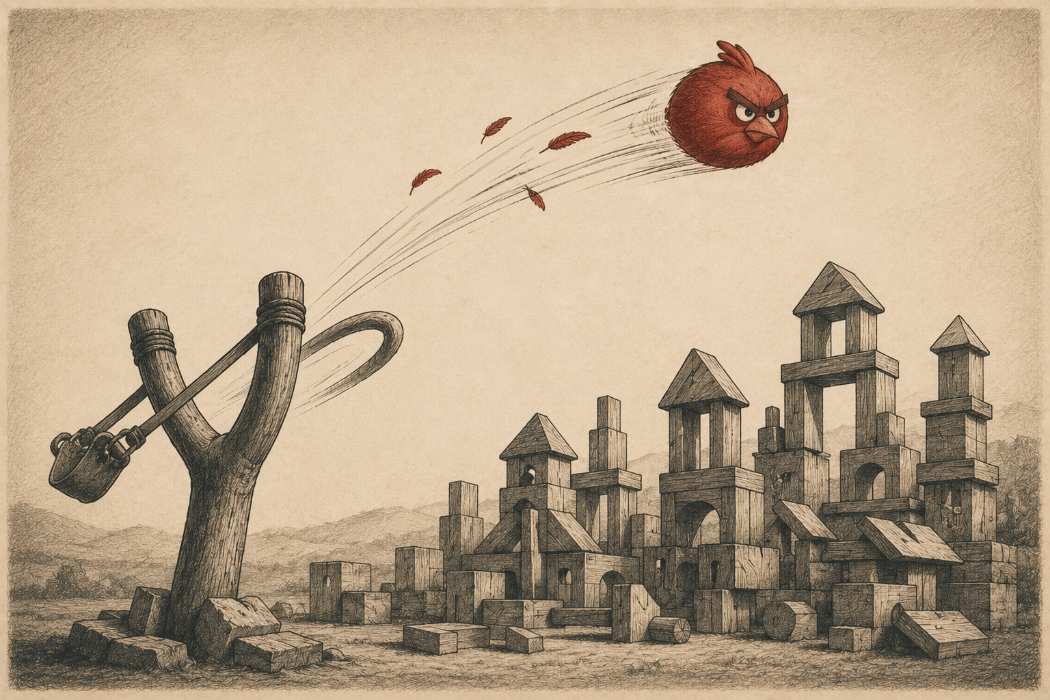
The mechanics arrived later: a slingshot, wobbly towers, green pigs as villains — reportedly a nod to the swine-flu headlines of that year — and physics tuned until failure itself was funny. Angry Birds shipped on the App Store in December 2009 at a defiantly small price, the studio's last real shot fired with a dozen people on payroll.
It did not explode; it crept. The game topped the chart in tiny Finland, then in a few small European markets. The inflection came in early 2010, when Apple featured it in the UK — within days it was the number-one paid app there, then in the United States, then nearly everywhere, and it simply stopped coming down: it spent most of a year atop charts and years in the top ranks.
What followed turned a mobile game into a media franchise of a scale the industry had never seen: by 2012 the Angry Birds family had passed a billion downloads, and the birds had escaped the screen into plush toys, theme parks and, in 2016, a feature film that grossed hundreds of millions worldwide. Rovio — twelve employees at the bottom — grew into the hundreds, went public in Helsinki in 2017, and was ultimately acquired by Sega in 2023 for about $775 million.
The moral the founders themselves insist on is unromantic: Angry Birds was not a bolt of luck but game number fifty-two. The fifty-one flops were the apprenticeship — the tuition a studio paid, title by title, to know a world-conquering bird when it finally waddled past.
Questions
How many games did Rovio make before Angry Birds?
Roughly 51, and none of them was a hit: the Finnish studio Rovio shipped them between 2003 and 2009. Angry Birds, released on Apple's App Store in December 2009, was game number 52.
Why was Rovio almost bankrupt before Angry Birds?
For six years Rovio lived on work-for-hire projects and its own games that went nowhere, in a mobile market of hundreds of handset models, carriers as gatekeepers and tiny margins. By 2009 it had shrunk from around fifty people to a dozen, and its money was nearly gone.
What happened to Rovio after Angry Birds?
Rovio grew from twelve employees into the hundreds: the Angry Birds family passed a billion downloads by 2012, the company went public in Helsinki in 2017, and Sega acquired it in 2023 for about $775 million.