In 1983, Steve Jobs recruited Pepsi president John Sculley to run Apple with one of the most famous pitches in business history: "Do you want to sell sugar water for the rest of your life, or do you want to come with me and change the world?" Two years later, the man he hired helped push him out of the company he had started in his parents' garage.
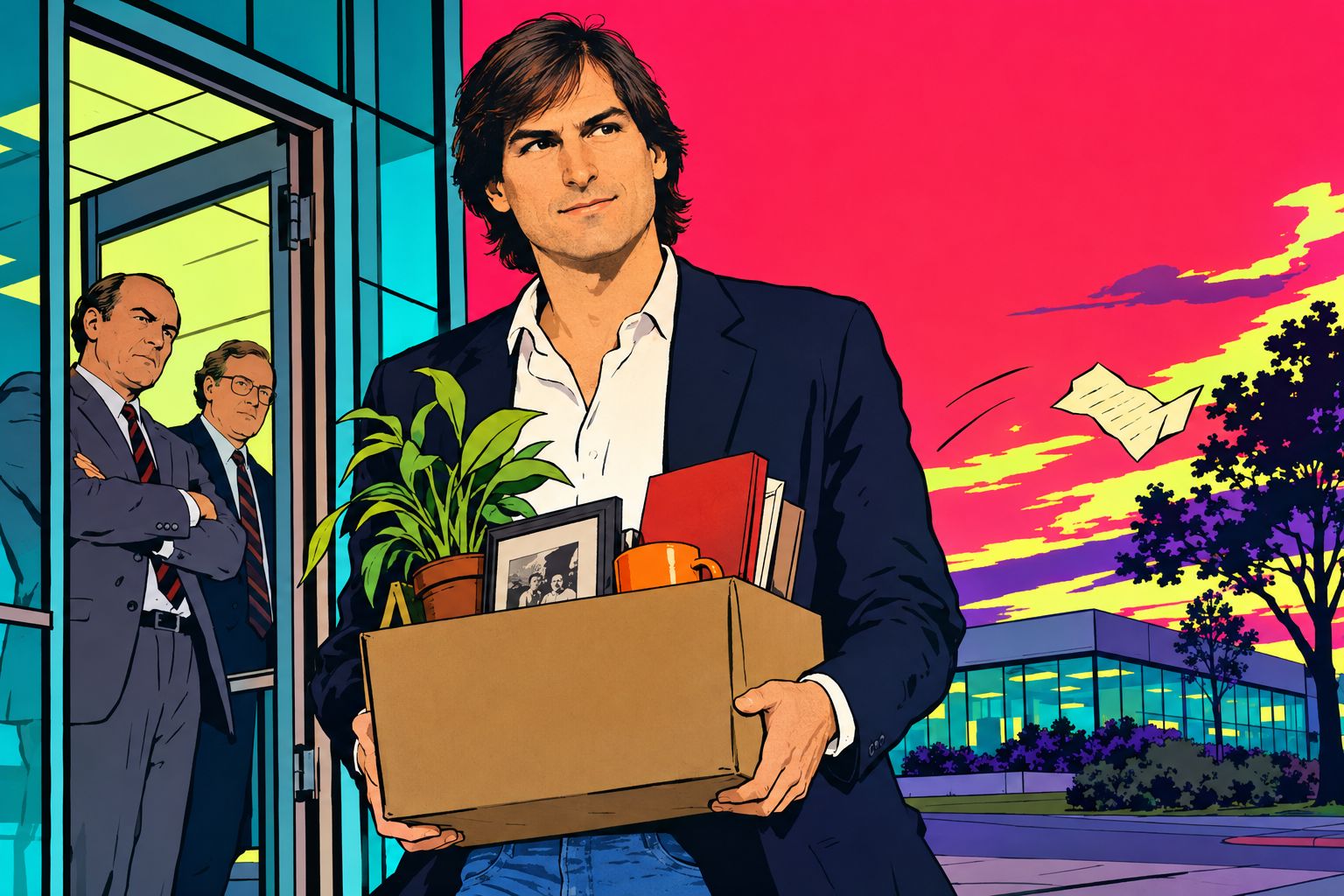
The collision was slow, then sudden. The Macintosh launched in 1984 to enormous fanfare — and then sales sagged. Jobs, who ran the Mac division, was brilliant, abrasive and impossible to manage; Sculley was the professional operator the board had hired precisely to impose order. In the spring of 1985, as the company's numbers worsened, the two stopped trusting each other.
“I was out — and very publicly out. What had been the focus of my entire adult life was gone, and it was devastating.”
Steve Jobs, Stanford commencement address, 2005When Jobs tried to rally support to replace Sculley, Sculley took the conflict to the board — and the board sided with him. That May, Jobs was stripped of operational responsibility. By September he had resigned. He was 30 years old, and the company that had been his identity since he was 21 no longer wanted him running anything.
"I was out — and very publicly out," he said twenty years later in his Stanford commencement address. "What had been the focus of my entire adult life was gone, and it was devastating." He considered leaving Silicon Valley entirely. Instead, he did the two things that would eventually bring him back.
First, he founded NeXT, a computer company aimed at universities and researchers. As hardware, NeXT was a commercial failure — beautiful, expensive machines that barely sold. But its real product turned out to be its operating system, NeXTSTEP: elegant, modern software years ahead of anything Apple was shipping.
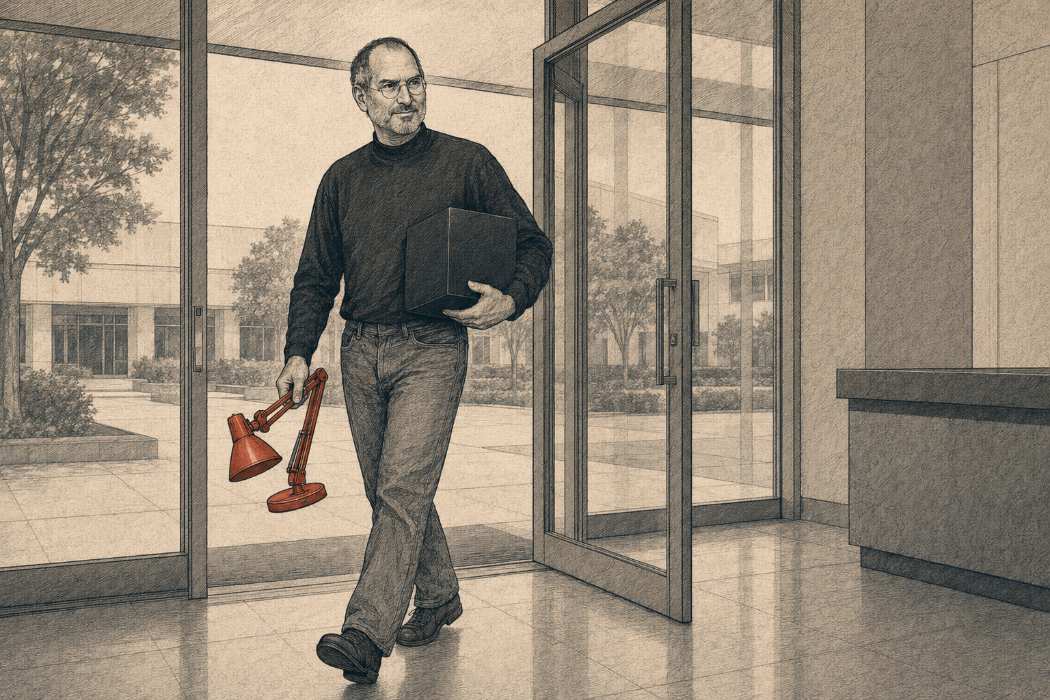
Second, in 1986 he bought a small computer-graphics outfit from George Lucas for around $10 million. He spent a decade funding it through losses. In 1995 that company, Pixar, released Toy Story — the first fully computer-animated feature film — and its IPO a week later made Jobs a billionaire.
Meanwhile Apple was dying. A decade of confused products and shrinking market share had brought it within months of bankruptcy, and its own modern operating system project had collapsed. In December 1996, Apple agreed to buy NeXT for $429 million — technology, team, and, almost incidentally, its founder. The exile came back through the front door, first as adviser, then as interim CEO.
What followed was the most storied second act in business: the iMac in 1998, the iPod in 2001, the iPhone in 2007, the iPad in 2010, and Apple's transformation from near-corpse into the most valuable company in the world. Jobs's own verdict on 1985, from that same Stanford speech, became the thesis of every comeback story since: "Getting fired from Apple was the best thing that could have ever happened to me. The heaviness of being successful was replaced by the lightness of being a beginner again."
Questions
Why was Steve Jobs fired from Apple?
Steve Jobs lost a power struggle with John Sculley, the Pepsi president he had recruited in 1983 to run Apple. When Jobs tried to rally support to replace Sculley in 1985, the board sided with Sculley, and Jobs, then 30, was out.
What did Steve Jobs do after leaving Apple?
Steve Jobs founded NeXT, a computer company aimed at universities and researchers, and in 1986 bought the computer-graphics company that became Pixar from George Lucas for around $10 million. Pixar's IPO in 1995 made him a billionaire.
How did Steve Jobs return to Apple?
Through NeXT. In December 1996 Apple, within months of bankruptcy, agreed to buy NeXT for $429 million, and Steve Jobs came back with it, first as adviser, then as interim CEO.