In May 1922, a twenty-year-old commercial artist in Kansas City talked local investors into backing his cartoon studio. Walt Disney's Laugh-O-Gram Films raised fifteen thousand dollars, hired a remarkable crew of young animators — including Ub Iwerks, the best draftsman he would ever know — and set about making animated fairy tales for movie theaters.
The product was good; the business was doomed. Their New York distributor collapsed after paying only a token advance on the contract, and the studio never recovered the money. Disney let the staff go, slept in the office, lived on canned beans and bathed once a week at Union Station. In 1923, Laugh-O-Gram went through bankruptcy.
That July, Disney bought a train ticket to Los Angeles with about forty dollars to his name, carrying a cardboard suitcase and one unfinished film reel — a short that mixed a live-action girl with cartoon characters called Alice's Wonderland. He was twenty-one, and by his own later accounts, this was the moment that hardened him.
In Hollywood, with his brother Roy handling the money, the reel found a buyer: a distributor commissioned a whole series of Alice Comedies. The brothers' little studio survived on it for three years. Then, in 1927, came the real hit — Oswald the Lucky Rabbit, a spirited character Disney and Iwerks created for Universal. Oswald shorts packed theaters. The Disneys, at last, were winning.
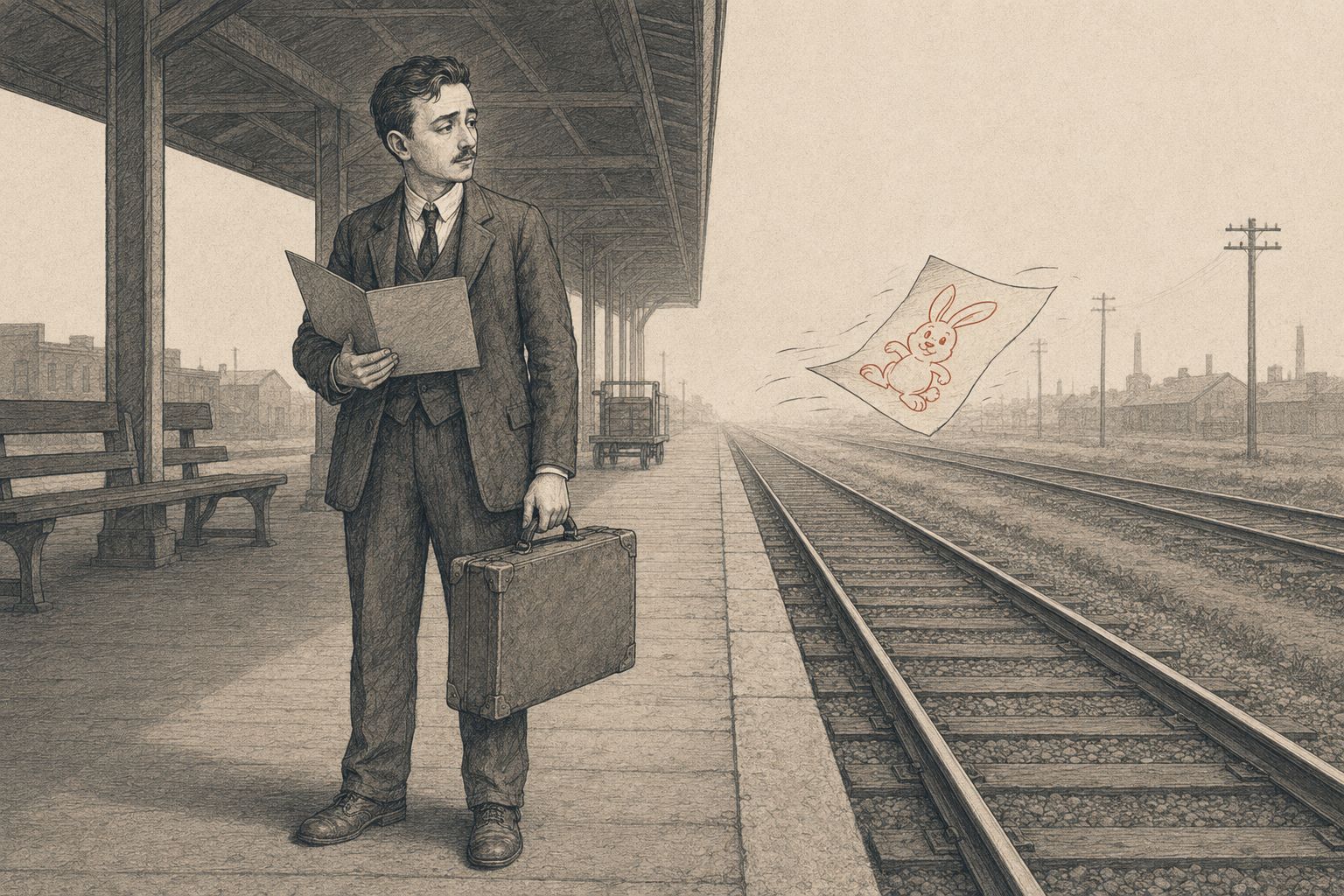
In February 1928, Walt took the train to New York to renegotiate the Oswald contract, expecting a raise. The distributor, Charles Mintz, offered a budget cut instead — and revealed his leverage: he had quietly signed away most of Disney's animators, and Universal, not Disney, owned Oswald outright. Walt could accept worse terms for his own creation, or walk away with nothing. He walked.
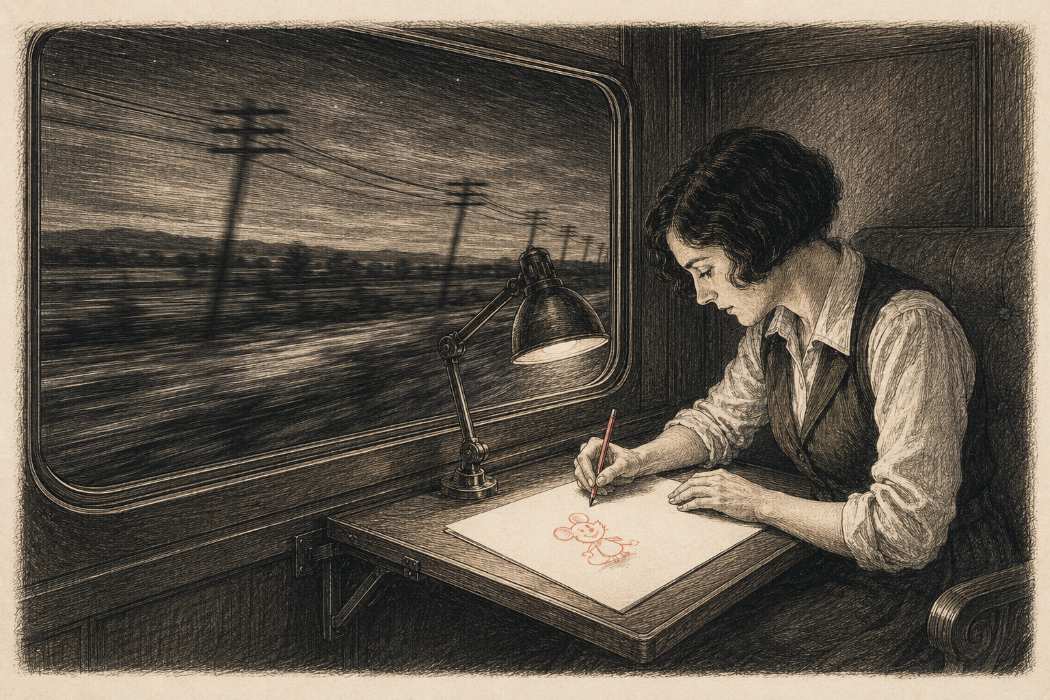
The telegram he sent Roy from New York became studio scripture: everything OK, details when I arrive. On the long train ride home — so the studio's founding legend goes — he began sketching the character that would replace the rabbit. What is documented beyond legend: within months, working in secret with Iwerks, he had a mouse.
Two silent Mickey Mouse shorts failed to find a distributor. The third gamble was the one that mattered: sound. Steamboat Willie, with its synchronized whistles, clangs and squeaks, premiered in New York on November 18, 1928, and detonated. Mickey became the most famous character on earth — and this time Walt Disney owned him, completely.
The bankruptcy and the stolen rabbit set the two iron rules the Disney empire was built on: own your characters, and bet on the next technology before your rivals do. There is even a coda — in 2006, the Walt Disney Company finally brought Oswald home, trading a sports broadcaster to NBCUniversal for the rights to the rabbit Walt lost in 1928.
Questions
Why did Walt Disney's first studio go bankrupt?
Walt Disney's first studio, Laugh-O-Gram Films in Kansas City, went bankrupt in 1923 because its New York distributor collapsed after paying only a token advance on the contract. The studio never recovered the money.
How old was Walt Disney when his first studio went bankrupt?
Twenty-one: Walt Disney's Laugh-O-Gram studio went bankrupt in 1923, and that July he left for Los Angeles with about forty dollars, a cardboard suitcase and an unfinished reel called Alice's Wonderland.
How did Walt Disney lose Oswald the Lucky Rabbit?
In February 1928 distributor Charles Mintz offered Walt Disney a budget cut instead of a raise, revealing that he had signed away most of Disney's animators and that Universal, not Disney, owned Oswald. Disney walked away, and within months he had Mickey Mouse.